( 20+ Reviews )
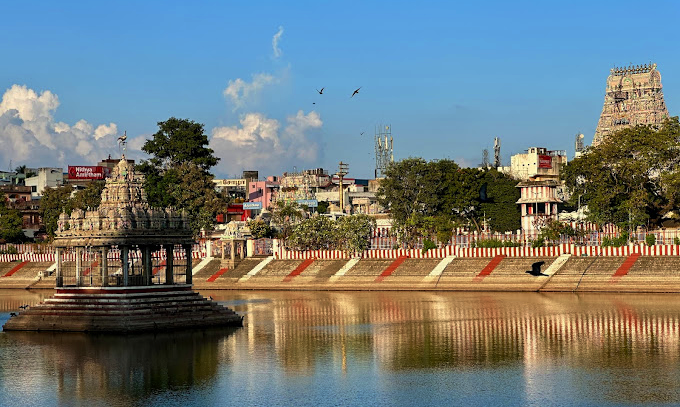
Begin your exploration of South India’s vibrant heritage in Chennai, where the Kapaleeshwarar Temple reflects a harmonious blend of tradition and modernity. Continue to Kanchipuram to admire the ancient Kailasanathar Temple, followed by the UNESCO-listed Shore Temple in Mahabalipuram. Experience the colonial charm of Pondicherry’s French Quarter before marveling at the architectural masterpiece of Brihadeeswarar Temple in Tanjore. In Trichy, immerse yourself in the grandeur of the Srirangam Temple Complex and feel the spiritual energy at Madurai’s iconic Meenakshi Temple. Discover Chettinad’s heritage mansions, showcasing unique local architecture, and conclude your journey on Kovalam’s serene beaches. This tour seamlessly combines history, architectural wonders, and natural beauty.
Received at Chennai airport, you are transferred to your hotel to relax and settle in. Chennai, once called Madras, is among India’s largest cities with nearly 10 million residents. Positioned on the Coromandel Coast by the Bay of Bengal, it has served as a key administrative, military, and commercial hub since the 1st century. Over the centuries, the region was governed by several South Indian dynasties, including the Pallavas, Cholas, Pandyas, and the Vijayanagara Empire. In 1522, the Portuguese arrived and established the São Tomé port. The Dutch followed in 1612, setting up a base near Pulicat, just north of the city. In 1639, Francis Day from the East India Company secured a lease for land in the fishing village of Madraspatnam, and the following year, the Company constructed what became the first significant British settlement in India. You will spend the night at your hotel in Chennai.
Begin your day with a drive to Kanchipuram, a city that once served as the capital for the early Chola dynasty in ancient times and later flourished under the Pallava and Vijayanagara empires. Recognized as one of Hinduism’s seven holiest cities, Kanchipuram is often called the “Golden City of a Thousand Temples,” with its origins tracing back to the second century under the Cholas. Today, about 70 temples from the original complex remain, the most notable being the Kailasanatha Temple, constructed from sandstone in the early seventh century. During your visit, explore the Vardharaja Perumal Temple, Ekambareswarar Temple, Kamakshi Amman Temple, and Ulaganatha Perumal Temple. The town is also renowned for its silk weaving tradition, so take the opportunity to visit a weaving center and learn about the art of saree making. Afterward, continue your journey to Mahabalipuram and check in at your hotel, where you will spend the night.
Mahabalipuram, a UNESCO World Heritage site, is considered the most significant historic location along the Coromandel coast. The town is famed for its stunning temples, crafted during the Pallava dynasty from the 7th century onwards. The Pallava rulers, who governed from their capital at Kanchipuram between the 3rd and 9th centuries CE, used Mahabalipuram as a prominent port to conduct trade and diplomatic exchanges with Sri Lanka and Southeast Asia. Many of its monuments are carved from single pieces of stone.
A sightseeing tour of Mahabalipuram includes the renowned Shore Temple, dedicated to both Shiva and Vishnu, and the Five Rathas—monolithic temples each carved from a single granite rock and showcasing unique architectural styles. Other must-see attractions are Arjuna’s Penance, the Varaha Cave, and Krishna’s Butter Ball. Visitors can also stroll through the artisan streets, where local craftsmen create stone sculptures. The afternoon is free for leisure, with an overnight stay at a hotel in Mahabalipuram.
The morning journey to Pondicherry brings you to a remarkable city, celebrated for its colonial-era buildings, scenic seaside promenades, tranquil spiritual centers, leafy boulevards, and inviting beaches. The French influence is unmistakable here—French remains widely spoken and understood among the locals. Pondicherry is often referred to as “la Côte d’Azur de l’Est,” meaning the French Riviera of the East. Several heritage buildings in the city date back to the 18th century, a legacy of its time as a French colony. This French heritage is especially apparent in the old quarter, where the architecture strongly reflects French design. The afternoon is free for you to relax in Pondicherry, perhaps enjoying a walk through White Town, the French-influenced area of the old city. Stay overnight at your hotel in Pondicherry.
Morning drive to Tanjore. Tanjore holds a prominent role in South Indian history. Serving as the early capital of the Chola dynasty from the 9th to 11th centuries, the city maintained its significance through the Vijayanagar, Maratha, and British eras. Tanjore is recognized for its unique art form, where paintings are adorned with gold leaf, lace, and semi-precious stones, as well as its tradition of embossed metalwork. The city is also famously known as the Rice Bowl of Tamil Nadu. Overnight stay at a hotel in Tanjore.
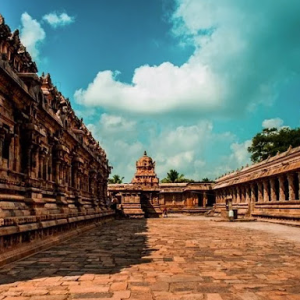
Begin your day by exploring the Brihadeeshwara Temple, regarded as one of India’s most remarkable temples. A highlight here is the massive Nandi statue, the sacred bull of Lord Shiva, which stands 13 feet tall and 16 feet wide, carved from a single block of stone. The temple is enclosed by fortified walls adorned with intricate rock carvings, adding to the grandeur of the site. Its main tower rises to 216 feet, making it the tallest of its kind globally, and the entire temple is constructed from granite. The impressive gateways, or gopurams, are richly detailed with sculptural work.
Next, head to the Thanjavur Maratha Palace Complex, locally called Aranmanai, which served as the official residence for the Bhonsle rulers of Tanjore from 1674 to 1855. Within the complex, the Saraswathi Mahal Library displays a rare assortment of palm leaf manuscripts and documents in languages such as Tamil, Hindi, Telugu, Marathi, English, and several others, with the collection exceeding 60,000 volumes.
Afterward, visit a local artisan’s home, where the renowned South Indian musical instrument, the Veena, is crafted. In the afternoon, travel to Trichy, a city with a history dating back to the 3rd century BC. Here, the Srirangam temple complex is set on an island between the Cauvery and Kollidam rivers and is considered among the world’s largest functioning temple complexes. The temple town spans 156 acres, featuring 21 vibrantly decorated towers, nine ponds, and impressive frescoes, including a unique depiction of Tulukka Nachiyar, the Muslim consort of the deity. Return to Tanjore for an overnight stay at your hotel.
Morning, set out for Madurai. This city, deeply rooted in Tamil heritage, is lively, enchanting, bustling, and spiritual. Known locally as “Thoonga Nagaram,” or “the city that never sleeps,” Madurai offers a truly remarkable experience. Its origins reach back to the third century BCE and the city is referenced in the accounts of ancient Arab, Roman, and Greek travelers such as Megasthenes. Expect a sensory feast: brilliant colors and the resonant sound of temple bells fill the air. The city’s historic temples and age-old architecture easily overshadow the presence of modern skyscrapers. Upon reaching Madurai, check in to your hotel. The afternoon is free for relaxation. In the evening, visit the temple to witness a unique night ceremony. Stay overnight at your Madurai hotel.
Begin your day with a visit to the Sri Meenakshi Temple, the landmark of Madurai and an outstanding example of Dravidian architecture. The temple is surrounded by four grand gopurams and contains nearly 33,000 statues. The Thousand Pillars Hall is another architectural marvel within the complex. Next, explore the Thirumalai Nayakkar Palace. Then, head to the Madurai flower market, home to what is likely India’s largest jasmine market. Madurai’s jasmine is renowned globally, drawing perfume makers from across the world to this temple city. In the afternoon, take a drive outside Madurai to the Thirupparankundram temple, which sits atop a rocky hill accessed by a flight of steps. The climb is rewarding, as the temple and its surroundings exude a unique and captivating atmosphere. Stay overnight at a hotel in Madurai.
Arrive in Chettinad in the morning and settle into your hotel. Chettinad, situated in the heart of Tamil Nadu, is made up of 76 villages and is renowned for its distinctive architecture and celebrated cuisine. The local Chettiar community, historically known as traders in salt, textiles, gems, and jewellery, played a significant role in India’s banking sector during the 19th century. Their villages are dotted with grand mansions featuring hundreds of rooms, extensively using Burmese teak wood.
In the afternoon, tour the Palace in Kanadukathan Village, which showcases the lavish interiors and architectural brilliance of the Chettiar homes. Exploring the village on foot offers fascinating insights into its rich heritage. Chettinad is also noted for its handmade tiles, and a visit to a tile-making center in Athangudi village is included. Spend the night at your hotel in Chettinad.
Begin your day with a drive to Kovalam, stopping en route to explore the Sree Padmabhapuram Palace complex. This impressive palace offers an authentic look at Kerala’s traditional architectural style. Nestled in a picturesque village, the palace is surrounded by scenic beauty, and a stroll through the nearby village is highly recommended. Continue your journey to Kovalam and check in at your hotel. Stay overnight at your hotel in Kovalam.
Relaxing days spent by the sea. Nights spent at a hotel in Kovalam.
In time, transfer to Trivandrum airport for departure flight.